
Why Some Homes Sell Fast in a Slow Market
When the real estate market cools, many homeowners assume longer listing times are unavoidable. Fewer buyers, higher interest rates, and cautious decision-making can all slow activity. Yet even in these conditions, certain homes still attract multiple showings, strong offers, and fast sales.
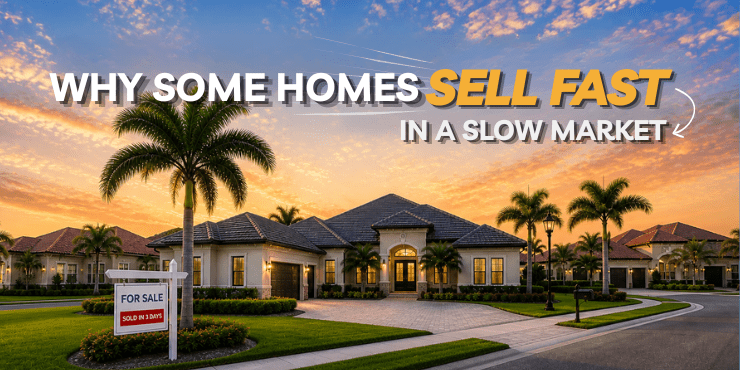
This contrast raises an important question. If the market is slowing overall, why do some homes still sell quickly while others linger?
The answer is not luck. Homes that sell fast in a slower market tend to share specific characteristics related to pricing, presentation, location, and strategy. Understanding these factors helps sellers position their homes competitively and helps buyers recognize why certain listings move so quickly. Having navigated market shifts in Wellington since 2001, I have seen these same patterns repeat across multiple market cycles.
While market conditions vary, homes that sell fast in a slow market typically share these traits and strategies:
- Correct pricing: They are priced correctly for current market conditions
- Strong presentation: They present as clean, well-maintained, and move-in ready
- Desirable location: They are marketed and priced to reflect what their location is worth today
- Clear strategy: They launch with a clear pricing and marketing strategy
- Seller flexibility: Sellers respond realistically to market feedback
Market Conditions Set the Stage but Do Not Decide the Outcome
A slower market means buyers have more choices and leverage, not that demand disappears. A slower market simply means buyers have more choices and more leverage than before. It does not mean buyers disappear. People still relocate for work, grow their families, downsize, or make lifestyle changes. The difference is that buyers become more selective.
In hot markets, pricing mistakes and cosmetic issues are often forgiven. In slower markets, buyers notice everything. Homes that align closely with buyer expectations rise to the top. Homes that do not tend to sit.
This is why two similar homes in the same neighborhood can perform very differently at the same time.
In real estate terms, slower conditions often show up as higher months of inventory. As months of inventory rises, the market shifts along the spectrum from a seller’s market toward a buyer’s market, because buyers have more listings to choose from and less pressure to act immediately. Another way to describe this is the absorption rate, which is simply how quickly the current supply of homes is being purchased over time.
| Sellers Market | Buyers Market |
|---|---|
| Buyers compromise more | Buyers become more selective |
| Small flaws are often overlooked | Condition and presentation stand out |
| Overpricing can be forgiven longer | Pricing errors stall listings quickly |
| Momentum carries listings | Strategy and execution matter more |
Key Reasons Some Homes Sell Faster in a Slow Market
Correct Pricing Is the Single Biggest Factor
Pricing is the most powerful driver of a fast sale, especially when demand softens. Pricing is the most powerful driver of a fast sale, especially when demand softens. Homes that sell quickly in slower markets are priced based on current conditions, not past highs. Many sellers struggle here. They anchor to what a neighbor sold for months ago or what their home might have sold for during a peak period.
Buyers do not shop based on yesterday’s market. They shop based on today’s inventory, interest rates, and monthly payment comfort. Well-priced homes create urgency. They show up in more searches, attract more showings, and invite competitive interest. Overpriced homes quietly lose momentum, often requiring price reductions that signal weakness to buyers.
In many cases, the homes that sell fastest are not the cheapest. They are the most accurately priced for their condition and location. If you have ever wondered why two similar homes can sell for different prices, the answer often comes down to timing, condition, presentation, and how buyers compare competing listings.
Presentation Matters More When Buyers Have Options
When buyers have fewer choices, they compromise, but when choices increase, presentation becomes a deciding factor.
When buyers have fewer choices, they compromise. When choices increase, presentation becomes a deciding factor.
Homes that sell quickly in slower markets usually present as clean, well-maintained, and move-in ready. That does not mean fully renovated or luxury finishes in every room. It means the home feels cared for.
Key presentation factors include neutral paint colors, uncluttered spaces, clean flooring, updated lighting where possible, and strong curb appeal. Small issues like worn carpet, dated fixtures, or deferred maintenance stand out more when buyers can simply move on to another option.
Professional photography also plays a major role. Buyers often decide whether to schedule a showing based on photos alone. Listings with dark, cluttered, or poorly framed images struggle to generate interest even if the home shows well in person.
Location Never Stops Mattering — but You Can Price and Market to It
Location never stops mattering, but its influence becomes more obvious when demand softens.
Location never stops mattering, but its influence becomes more obvious when demand softens. You cannot change where your home sits, but you can make sure your pricing and marketing reflect what that location is actually worth in today’s market.
Homes near top-rated schools, major employers, parks, shopping, and commuter routes tend to outperform the broader market. Desirable neighborhoods often see fewer price reductions and shorter days on market compared to less convenient or less established areas.
Within the same community, micro-location matters too. Homes on quiet streets, cul-de-sacs, or with better lot positioning often sell faster than similar homes on busier roads or with less privacy. If your location is a strength, your marketing should lead with it. If it is a challenge, accurate pricing from the start is the most effective way to stay competitive.

Move-In Ready Homes Attract Cautious Buyers
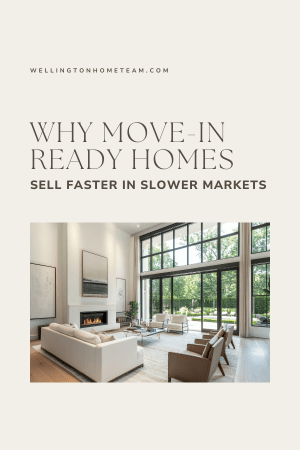
In slower markets, buyers often become more conservative with renovation projects. In slower markets, buyers often become more conservative with renovation projects. Higher interest rates and economic uncertainty make many buyers hesitant to take on additional costs or construction timelines.
As a result, homes that require minimal immediate work tend to sell faster. Updated kitchens and bathrooms help, but even simple upgrades like newer flooring, fresh paint, and functional systems can make a significant difference.
Homes needing major repairs or extensive cosmetic updates often remain on the market longer unless priced aggressively to offset the perceived effort and risk.
Marketing Strategy Separates Fast Sales From Stale Listings
Not all listings receive the same level of exposure. Not all listings receive the same level of exposure. Homes that sell quickly often benefit from a thoughtful marketing plan that goes beyond simply posting the property online.
Strong listings include compelling descriptions that highlight value, lifestyle benefits, and standout features. They are launched with accurate pricing from day one, not tested high with the hope of negotiating later.
Timing also matters. Homes that hit the market with a clear strategy tend to capture early attention. The first few weeks are critical, as this is when serious buyers are most likely to engage.
In contrast, homes that launch without a clear plan often lose momentum quickly and require corrective pricing later.
Realistic Seller Expectations Keep Deals Moving
Homes that sell fast in slower markets often have sellers who understand current conditions. Homes that sell fast in slower markets often have sellers who understand the current market conditions and remain flexible.
This includes being open to reasonable negotiations, offering concessions when appropriate, and responding promptly to offers. Buyers in slower markets expect professionalism and cooperation.
Rigid pricing, refusal to address inspection concerns, or slow communication can derail otherwise solid deals. Sellers who adapt to market feedback tend to move forward more smoothly.
Emotional Appeal Strengthens Everything Else
Even in analytical markets, buyers are human. Even in analytical markets, buyers are human. Homes that create an emotional connection often sell faster than technically similar properties — and the good news is that emotional appeal is largely within a seller’s control.
Natural light, functional layouts, and inviting outdoor spaces all help. So does thoughtful staging — clearing surfaces, arranging furniture to highlight flow, and making spaces feel livable rather than lived-in. Emotional appeal does not replace accurate pricing or strong condition, but when those are already in place, it is often what tips a serious buyer from interested to committed.
What This Means for Sellers
A slower market does not mean settling for a long, frustrating sale. It means being strategic.
Homes that sell fast share common traits. Accurate pricing, strong presentation, move-in readiness, and a clear marketing approach. When sellers also price and market to their location honestly and stay flexible through the process, buyers respond even when the broader market cools.
Understanding these factors allows sellers to position their homes to stand out rather than blend in.
Thinking about selling? If you want a pricing and marketing plan built for today’s market, you can request a home value and strategy review here.
What This Means for Buyers
For buyers, fast-selling homes offer insight into what the market values most. If a home attracts immediate interest, it often reflects strong fundamentals rather than hype. Recognizing why certain homes move quickly helps buyers compete more effectively and make informed decisions without overpaying.
Final Thoughts
Markets change, but buyer behavior follows patterns. When demand softens, quality and strategy rise to the surface. Homes that align with buyer expectations still move efficiently, while others stall.
The difference is rarely accidental. It is the result of preparation, realism, and understanding how buyers think when choices expand.
Please consider spreading the word and sharing: Why Some Homes Sell Fast in a Slow Market
Why do some homes sell in days while others sit for months? Learn the 5 strategic factors that drive fast sales in a slow market—from pricing to presentation. #realestate #sellingFAQ: Why Some Homes Sell Fast in a Slow Market
Why do some homes sell quickly even when buyers have more choices?
Homes that are priced correctly, show well online and in person, and feel move-in ready tend to rise to the top when buyers become more selective.
Is pricing the main reason a home sells fast in a slower market?
Yes, pricing is usually the biggest factor. Accurate pricing based on current competition and condition creates urgency and increases showings, which often leads to stronger offers.
Do updates and renovations matter more when the market slows?
They often do. Buyers tend to be less willing to take on projects in uncertain conditions, so homes with clean finishes, solid systems, and minimal deferred maintenance typically sell faster.
How important are photos and marketing in a slow market?
Very important. Most buyers decide whether to tour a home based on the listing presentation. Professional photos, clear descriptions, and strong launch timing can make a listing feel like the best option.
What should sellers do if their home is not getting showings?
Low showing activity is usually a pricing or presentation signal. The fastest fixes are improving photos, tightening the listing description, and adjusting price to better match current inventory.
How long is a home considered “new” on the market?
In many markets, the “honeymoon period” is the first 14 days, when a listing often receives its highest visibility and strongest early interest. After about 21 days without an offer, some buyers begin to wonder if the home is overpriced or if there are issues they are not seeing, even when the home is perfectly fine.
About the Author
Michelle Gibson is a Realtor with Hansen Real Estate Group Inc. and has specialized in residential real estate since 2001 in Wellington, Florida, and nearby communities. She helps buyers and sellers make confident decisions with clear guidance on pricing, negotiations, inspections, and closing timelines.
Areas of service include Wellington, Lake Worth, Royal Palm Beach, Boynton Beach, West Palm Beach, Loxahatchee, Greenacres, and surrounding areas.