
Pros and Cons of Renting vs. Selling Your Home
If you’re moving and trying to decide whether to sell your home or rent it out, you’re weighing one of the biggest financial decisions a homeowner can make. There isn’t a universal right answer. The best choice depends on your numbers, your goals, and whether you’re actually prepared to take on the responsibilities of being a landlord.
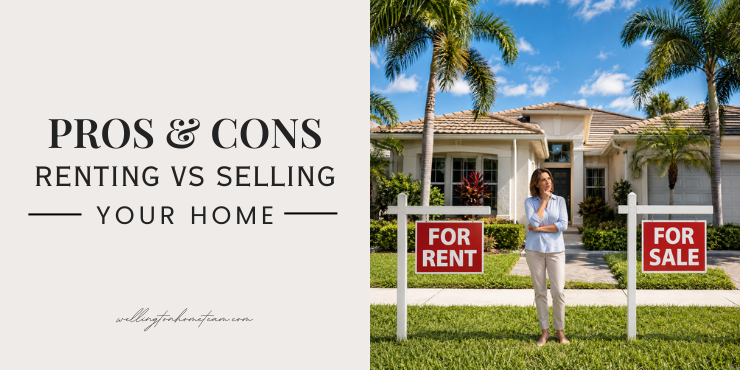
Below is a complete breakdown of the pros and cons of renting versus selling, along with the numbers you need and the questions you should ask yourself before deciding.
When Renting May Make More Sense
- You can comfortably cover the property’s expenses
- The expected rent leaves room for vacancies and repairs
- You want to keep the property as a long-term investment
- There’s a real chance you’ll move back to the area
- You don’t need the equity right away
When Selling May Make More Sense
- You need the equity for your next home
- The property won’t generate enough cash flow to justify the risk
- You don’t want landlord responsibilities
- You’re uncomfortable carrying the property through vacancies or major repairs
- Life circumstances, such as a divorce, make a clean sale the more practical choice
Start With the Numbers
Start by getting two realistic numbers: what your home could sell for today and what it could realistically rent for. A local real estate professional can provide a comparative market analysis for the potential sale price and current rental data for the property’s likely rental value. Online valuation tools are calculated by a computer that has never seen your home, so treat those figures as a starting point at best.
If You Sell
 Estimated market value
- Mortgage payoff amount
- Closing costs, commission, and other selling expenses
- Net proceeds after payoff and costs
- Potential capital gains considerations
 Estimated market value
If You Rent
- Expected monthly rent
- Mortgage payment
- Property taxes and homeowners insurance
- HOA fees, if applicable
- Lawn and pool service
- Maintenance and repair buffer
- Property management fee, if you hire one
- Vacancy buffer
Once you have real numbers on both sides, you can see whether selling nets you a profit, whether renting actually covers your monthly overhead, or whether you’d need to bring money to the table either way. Selling costs are often more than just commission. Closing fees, title fees, transaction fees, and search fees can add up to thousands of dollars, and who pays closing costs when buying or selling a home isn’t always obvious, so it’s worth confirming upfront.
Don’t Compare Rent to Your Mortgage Payment Alone
A common mistake is comparing the expected rent to the mortgage payment and assuming the difference is profit. Your true rental expenses also include property taxes, insurance, HOA fees, maintenance, repairs, vacancies, property management, and other ownership costs that don’t show up every month but still show up eventually.
You also need to consider the equity tied up in the property. If selling would give you a substantial amount of cash, it’s worth comparing the potential return from keeping the property against what that money could do elsewhere if you sold and reinvested it.
Pros of Renting Your Home
- Monthly cash flow potential. A property may generate positive cash flow if rental income exceeds its ongoing expenses, but you also need to account for vacancies, major repairs, capital expenses, and other costs that don’t occur every month. Homes with the right features of a profitable rental may be better positioned to maintain consistent rental demand and cash flow.
- Mortgage principal reduction. If the property has a mortgage, part of each payment may reduce the loan balance, allowing you to build additional equity over time even before accounting for appreciation.
- You retain your investment in the property. Instead of converting your equity to cash through a sale, you keep the property and remain exposed to its future appreciation, or decline, in value.
- A backup plan if you might move back. Renting keeps the door open if there’s a chance you’ll return to the area.
- Potential tax benefits. Rental expenses and depreciation may offer deductions, though you should confirm specifics with a tax professional.
Cons of Renting Your Home
- Landlord responsibilities. You, or a property manager you pay for, become the point of contact for repairs, complaints, and tenant communication, and even experienced owners run into mistakes landlords make when accepting a tenant if they rush the process.
- Tenant risk. A tenant who stops paying, damages the property, or requires eviction can turn a “profitable” rental into a costly one fast. A consistent, fair-housing-compliant screening process can reduce the risk of accepting an unqualified tenant, and skipping that step is one of the most common pitfalls homeowners face when renting out part or all of a property.
- Vacancy costs. Time between tenants still comes with a mortgage payment and no rental income to cover it.
- Unexpected repairs. A single major expense, like replacing an HVAC system, can wipe out a year of “profit” in one call. These are among the common mistakes that sink rental property profits when owners aren’t prepared for them.
- Property management fees. If you don’t want to be the point of contact yourself, hiring a property manager is another monthly cost to factor in.
- HOA approval delays. If your home is in an HOA, the association may have its own application and approval process for tenants. Check the community’s current rules and timeline rather than assuming a tenant can move in right away.
Pros of Selling Your Home
- Immediate capital. Selling converts your equity into cash you can use for a new home purchase or other goals.
- No ongoing responsibilities. You’re free of maintenance, tenant management, and the unpredictability that comes with owning a rental.
- Potential for a strong offer. In a seller’s market, you may receive competitive or above asking price offers.
- Simplicity. One transaction and you’re done, with no ongoing decisions to make about the property.
Cons of Selling Your Home
- Selling costs add up. Commission, closing costs, title fees, and possible repairs or staging can take a real bite out of your proceeds, so knowing how much money you actually keep after a home sale matters more than the sale price alone.
- Market timing risk. A slower market can mean a longer time on the market and less negotiating leverage.
- You lose future upside on this specific property. Once it’s sold, any future appreciation in that home belongs to the new owner, though the proceeds can still be invested elsewhere.
- It may take longer than expected. Especially with heavier competition from other sellers in your area.
Are You Actually Prepared to Be a Landlord?
This is the question that trips up more homeowners than the financial math does. Before you commit to renting, be honest with yourself about the following.
- Can you survive a bad tenant? If rent stops coming in, do you know the eviction process in your state, and can you carry the mortgage while it plays out?
- Can you afford unexpected repairs? A security deposit rarely covers major damage, and court judgments don’t guarantee payment.
- Do you have a network for repairs? Unless you hire a property manager, you’re the one fielding calls and lining up contractors.
- Can you handle a needy tenant? Some tenants call constantly. Others barely call at all. You won’t know which you’ll get.
- Can you wait to find a tenant? It can take months from listing to move-in, and that gap comes with real costs.
- Is your home in rentable condition? Most tenants expect fresh paint, clean flooring, and updated appliances. The same staging principles that help a home show well when selling(opens in new tab) can make a real difference in how quickly it rents and at what price, so factor that cost in before you decide.
 Can you survive a bad tenant? If rent stops coming in, do you know the eviction process in your state, and can you carry the mortgage while it plays out?
What Will Your Home Actually Rent For?
A top local rental agent can show you what’s currently available and what similar homes in your neighborhood have actually rented for, not just listed for. That comparison, combined with your home’s condition, gives you a realistic number instead of a guess.
Rental value isn’t just a matter of what the neighbor’s house rented for. Condition, recent renovations, a pool, yard size, garage space, school zone, neighborhood, whether the home is furnished, pet policies, HOA restrictions, and lease term length can all move the number up or down. A local rental agent who knows your specific neighborhood will factor all of that in, rather than pricing off a single comparable.
If you hire a rental agent to place a tenant, that cost should be factored into your rental analysis. A consistent screening process, including credit, criminal, eviction, and income checks applied the same way to every applicant, is one of the best ways for a first time landlord to avoid the headaches that come with a bad tenant placement.
What Will Your Home Actually Sell For?
A top local Realtor can review recent comparable sales, active listings, and pending sales to give you a realistic sale price, typically at no cost to you. It’s worth understanding how agents actually evaluate comparable sales, since pricing a home is rarely as simple as averaging a few nearby listings.
If two agents give you wildly different numbers, get a second opinion. Some agents quote an inflated price just to win the listing. A licensed appraiser is another option, usually running $300 to $500, but make sure they’re familiar with your specific neighborhood. Just know that a CMA and a home appraisal aren’t the same thing, and the two numbers can come in differently.
Tax Implications to Keep in Mind
Both paths can carry tax consequences. Selling may involve capital gains considerations depending on how long you’ve owned the home and whether it was your primary residence. Renting may open up deductions for expenses and depreciation, but it also changes how the property is treated if you sell later.
These rules are specific to your situation, so this is one area where it’s worth speaking with a CPA or other qualified tax professional before you commit either way. Your Realtor can help you understand the real estate and transaction side, but your tax professional is the one who can address your individual tax situation.
Sell or Rent? A Simple Comparison
| Consideration | Sell | Rent |
|---|---|---|
| Immediate cash | Yes | No |
| Monthly income | No | Yes |
| Maintenance responsibilities | No | Yes |
| Remain exposed to this property’s future appreciation | No | Yes |
| Vacancy risk | No | Yes |
| Selling costs | Yes | No |
| Access to equity now | Yes | No |
| Keep this property as a long-term investment | No | Yes |
Questions to Ask Before You Decide
- Can you afford to keep the property if a tenant stops paying?
- Can you handle a major, unplanned repair?
- Can you tolerate a vacancy period without it straining your finances?
- Are you comfortable being a landlord, or paying someone else to be one?
- Will you need the equity in this home to buy your next one?
- Is there a real chance you’ll move back to the area?
- Does the rental income justify the responsibility of keeping it?
What about rent to own? A rent to own arrangement can be an option in certain situations, letting a tenant rent the property while holding the option to purchase it later. These agreements carry their own legal and financial considerations, so it’s worth understanding how rent to own actually works before pursuing one.
Frequently Asked Questions
What are the disadvantages of renting out your home?
The main disadvantages are landlord responsibilities, tenant risk, vacancy costs, and unexpected repair expenses. You’re also on the hook for property management if you don’t want to handle tenant calls yourself, and HOA approval can add delays before a tenant can move in.
Is it better to rent or sell your home?
Neither option is automatically better. Renting may make sense when the property has strong rental potential, you can comfortably handle the expenses and risks, and you want to retain the property as an investment. Selling may make more sense when you need the equity, don’t want landlord responsibilities, or the rental numbers don’t justify keeping the property.
What are the pros and cons of renting versus selling a house?
Renting offers monthly income and continued exposure to appreciation but comes with landlord responsibilities and tenant risk. Selling gives you immediate capital and no ongoing responsibilities but means paying selling costs and giving up future upside on that specific property.
How do I know if I can afford to rent my home?
Calculate your full monthly overhead, including mortgage, taxes, insurance, HOA, and a buffer for repairs and vacancies, then compare it to a realistic rent estimate from a local rental agent. If your buffer is thin, make sure you could still cover a major repair or a few months of vacancy without financial strain.
Do I need a property manager if I rent out my home?
Not necessarily, but if you don’t want to be the point of contact for repairs, tenant complaints, and rent collection, a property manager handles that for a monthly fee. Many owners find it worth the cost to avoid the day to day demands of being a landlord.
Final Thoughts
There’s no universal right answer when it comes to renting versus selling your home. The best decision comes down to your actual numbers, your risk tolerance, and whether you’re genuinely prepared to take on the responsibilities of being a landlord. If you’re a homeowner in Wellington, Royal Palm Beach, Lake Worth, West Palm Beach, or the surrounding Palm Beach County area and you’re weighing this decision, we can help you compare both options with a realistic estimate of your home’s potential sale price and rental value, so you’re deciding based on actual numbers rather than guesswork.
Please consider spreading the word and sharing; Pros and Cons of Renting vs. Selling Your Home
See the real pros and cons of renting vs. selling your home, plus the numbers you need to decide with confidence in Wellington, FL #realestate #homeselling
About the Author
Top Wellington Realtor, Michelle Gibson, wrote: “Pros and Cons of Renting vs. Selling Your Home”
Michelle has been specializing in residential real estate since 2001 throughout Wellington, Florida, and the surrounding area. Whether you’re looking to buy, sell, or rent, she will guide you through the entire real estate transaction. If you’re ready to put Michelle’s knowledge and expertise to work for you, call or e-mail her today.
Areas of service include Wellington, Lake Worth, Royal Palm Beach, Boynton Beach, West Palm Beach, Loxahatchee, Greenacres, and more.