
One-Story vs Two-Story Homes: Which Is Right for You?
Choosing between a one-story and a two-story home is one of the most impactful decisions buyers make. While square footage, location, and price often dominate the conversation, the layout of a home shapes how it functions every day. From comfort and privacy to long-term costs and resale performance, the difference between one-story and two-story homes extends far beyond stairs.
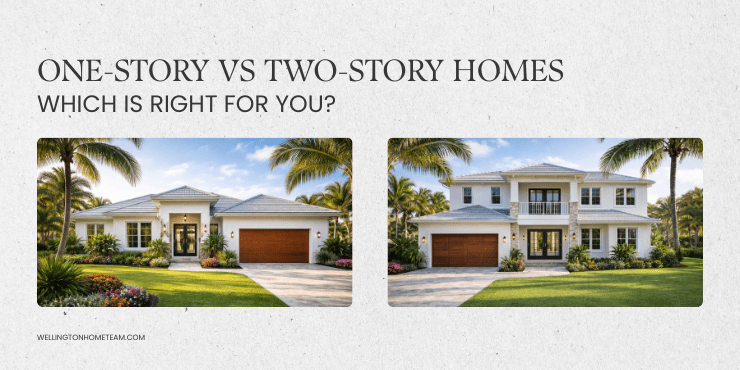
After helping buyers navigate this decision across Wellington and surrounding communities for over two decades, the same trade-offs come up every time. The right choice depends less on what looks best online and more on how a home will actually function for your household.
There is no universal winner. The better option depends on lifestyle, budget, future plans, and how a home will be used over time. This guide breaks down the real-world pros and cons of each design so buyers can make an informed choice that holds up both now and years down the road.
One-Story vs Two-Story Homes: Quick Comparison
A one-story home is usually better for long-term accessibility, simpler maintenance, and consistent comfort. A two-story home often offers more space for the price, better separation of living areas, and more yard on smaller lots. A good rule of thumb is to prioritize one-story living when stairs are a daily concern, and to prioritize two-story living when you want more space without paying for a larger lot. The best choice depends on lifestyle, budget, and how long you plan to stay.
| Feature | One-Story Home | Two-Story Home |
|---|---|---|
| Accessibility | Excellent, no stairs for daily living | Varies, stairs are part of daily use |
| Cost per square foot | Often higher | Often lower |
| Privacy and separation | Moderate, rooms share one level | High, bedrooms often separated upstairs |
| Yard and outdoor space | Depends on lot size, larger footprint | Often more yard on smaller lots |
| Long-term living | Strong choice for aging in place | Layout dependent, first-floor suites help |
Quick Decision Checklist
- If stairs would be a daily frustration, a one-story home is often the better fit.
- If you want more living space without paying for a larger lot, a two-story home often delivers more for the money.
- If you need separation for work-from-home schedules, a two-story layout can help create quieter zones.
- If you plan to stay long term, one-story living is usually the simpler option for comfort over time.
Understanding the Core Layout Differences
A one-story home places all living areas, bedrooms, and bathrooms on a single level. Everything is accessible without stairs, and the layout tends to feel open and connected.
A two-story home divides living space vertically. Common areas are usually on the first floor, with bedrooms located upstairs. This separation can offer privacy and flexibility but introduces stairways as a permanent feature of daily life. The distinction sounds simple, yet it affects nearly every aspect of ownership.
It is also worth noting how supply breaks down nationally. In many newer developments, two-story homes now make up the majority of new construction. That imbalance matters in practical terms. One-story homes are harder to find in many newer neighborhoods, which can translate directly to more competition and stronger offers when one becomes available.
What to Know Before Buying in Wellington and Palm Beach County
In Wellington and the surrounding Palm Beach County communities, one-story homes are particularly popular among long-term buyers, retirees, and households planning to stay put. Limited supply in many established neighborhoods means that well-priced one-story homes in Wellington attract strong interest and often move quickly.
Two-story homes tend to be more common in newer planned communities where builders maximize square footage on smaller lots. For buyers who prioritize yard space, a pool, or outdoor entertaining, browsing two-story homes in Wellington is a good starting point, as a two-story design on a smaller lot can actually deliver more usable outdoor area than a one-story home on a comparable parcel.
Flood zone designations, insurance costs, and storm preparedness all factor into layout decisions here in ways they simply do not in other parts of the country. Those considerations are addressed in the Florida-specific section below.
Cost Differences: Purchase Price and Construction
One-story homes often cost more per square foot to build and purchase. They require a larger footprint, more foundation work, and a larger roof. In markets where land is limited or expensive, this can drive prices higher.
Two-story homes typically offer more space for the money. By stacking square footage vertically, builders reduce land use, foundation size, and roof area. This efficiency often translates to a lower cost per square foot, especially in newer developments.
However, price alone should not drive the decision. Operating costs and long-term expenses also matter, and pricing expectations can get distorted by common assumptions. If you are sorting through conflicting advice, these six home pricing myths are worth reviewing before you start comparing listings.
Maintenance and Long-Term Ownership Costs
One-story homes are generally easier and less expensive to maintain. Roof inspections, exterior painting, and window work all require less equipment and less labor when everything is at ground level. HVAC systems also tend to be simpler with fewer zones to manage.
Two-story homes introduce more complexity. Roof and exterior work at height often means hiring professionals, and heating and cooling costs can run higher as warm air rises to the upper floor. Staircases also add wear points that need attention over time.
Why the same floor plan sells for different prices is a question that comes up often, and maintenance history and condition are usually a big part of the answer.
Daily Living and Lifestyle Considerations
Accessibility and Aging in Place
One-story homes are often preferred by buyers planning to stay long term. No stairs means easier navigation for children, pets, and aging homeowners. This layout can reduce the need for future modifications. Buyers specifically looking for age-restricted communities may also want to explore active adult 55+ communities in Wellington, many of which are built around single-level living.
Two-story homes can still work for long-term living, but stairs may become a concern over time. Some buyers plan for this by choosing layouts with a first-floor primary bedroom.
Privacy, Noise, and Security
Two-story homes excel at separating spaces. Bedrooms upstairs stay quieter while entertaining happens downstairs. This can be valuable for families with different schedules or those working from home.
One-story homes place all rooms on the same level, which can increase noise transfer. Thoughtful floor plans and soundproofing help, but separation is more limited.
One factor buyers sometimes overlook is entry-point exposure. One-story homes have more windows and doors at ground level, which can make them easier to access than a two-story home where upper-floor windows are out of reach. It is worth factoring into decisions about alarm systems, window locks, and exterior lighting when comparing the two layouts.
Heating, Cooling, and Energy Efficiency
One-story homes tend to maintain more consistent temperatures since there is no vertical heat movement pulling warm air upward. Two-story homes can struggle with imbalance, with upper floors running noticeably warmer, especially in Florida’s climate. Zoned HVAC systems help, but add cost and complexity.
Insulation quality, window placement, and system design ultimately matter more than the number of stories. For homeowners weighing comfort and operating costs, choosing the right HVAC system for a Florida home, and why insulation matters in every home, covers these trade-offs in detail.
Florida-Specific Considerations
In Florida, layout decisions affect comfort, insurance, and maintenance in ways that go beyond what buyers in other states typically weigh. One-story homes can make storm preparation more straightforward, from window boarding to roof inspections, and cooling tends to feel more even across a single level during humid summer months.
Two-story homes often benefit from added attic insulation, zoned cooling systems, and smart thermostat placement to reduce heat gain on upper floors. In a storm-prone region, roof access, exterior maintenance at height, and insurance inspection requirements are all worth factoring in before choosing between the two designs.
Flood zone designations are another consideration unique to South Florida. One-story homes in certain flood zones may require elevation, which affects both construction cost and insurance premiums. Buyers comparing layouts in Wellington or nearby communities should confirm flood zone status early in the process, as it can meaningfully affect the total cost of ownership for either home style.
Lot Size, Yard Space, and Outdoor Living
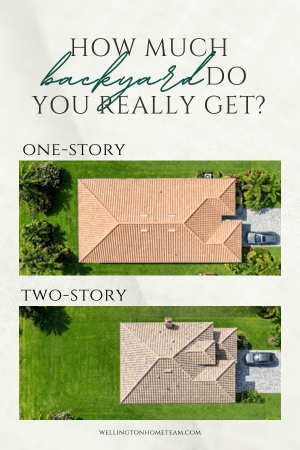
One-story homes typically require larger lots to accommodate the footprint. This can reduce backyard space or increase property size depending on the neighborhood.
Two-story homes leave more room for yards, pools, and outdoor living areas on smaller lots. This is one reason they are common in planned communities and urban settings. Buyers who prioritize outdoor entertaining often lean toward two-story designs for this reason.
Resale Value and Buyer Demand
Both layouts sell well, but buyer pools differ.
One-story homes attract:
- Downsizers
- Retirees
- Buyers planning long-term ownership
- Families wanting easy accessibility
Two-story homes attract:
- Growing families
- Buyers seeking more space on smaller lots
- Budget-conscious buyers
- Those who prefer defined living zones
Research across multiple markets has found that one-story homes sell at an average premium of roughly 10% compared to comparable two-story homes, with the range running from about 5% to 16% depending on location and buyer demographics. That premium reflects genuine demand and limited supply, not just perception.
In many markets, one-story homes command strong resale demand due to limited supply. Two-story homes often sell faster in family-oriented neighborhoods with school demand.
Neither layout is universally better for resale. Market conditions, neighborhood norms, and buyer demographics matter more than the number of floors. Eight things that increase home property value is a useful companion for buyers thinking about which features and upgrades move the needle most.
Safety and Everyday Convenience
One-story homes eliminate fall risks associated with stairs. This can be meaningful for households with small children or older adults. Two-story homes require stair safety features such as railings, lighting, and non-slip surfaces. While not inherently unsafe, stairs do introduce another element to manage.
Convenience also plays a role. Carrying laundry, groceries, or furniture is simpler in a one-story home. Two-story homes require more movement between levels, which some buyers view as exercise and others view as an inconvenience.
Design Flexibility and Floor Plan Options
Two-story homes offer more flexibility for separating functions. Home offices, guest rooms, and bonus spaces are easier to isolate. One-story homes emphasize open layouts and flow. They often feel larger than their square footage suggests, especially with vaulted ceilings and thoughtful design.
The quality of the floor plan matters more than the number of stories. A well-designed two-story can outperform a poorly designed one-story and vice versa.
Which Home Style Fits Your Needs?
Choose a one-story home if:
- Long-term accessibility matters
- You want simpler maintenance
- You prefer open layouts
- You plan to stay in the home for many years
Choose a two-story home if:
- You want more space for the price
- Privacy between living areas matters
- Yard space is a priority
- You need flexibility for growing households
A one-story home may not be the right fit if:
- You need maximum square footage on a budget
- One-story inventory is limited in your target area, and timeline is a factor
- Defined zones for work, kids, and guests are a priority
A two-story home may not be the right fit if:
- Stairs are already a daily concern
- You are planning for long-term aging in place without a first-floor primary suite
- Simpler maintenance and easier storm prep matter more than extra space
The right choice aligns with how you live, not just how the home looks.
Final Thoughts
The decision between a one-story and a two-story home is less about better or worse and more about fit. Each design offers strengths that appeal to different lifestyles, budgets, and future plans.
Buyers who focus only on square footage often overlook how layout affects daily comfort, long-term maintenance costs, and resale. Evaluating how a home will function today and adapt tomorrow leads to better long-term satisfaction.
Whether you choose one level or two, the best home is the one that supports how you live now and how you plan to live next.
FAQ: One-Story vs Two-Story Homes
Do one-story homes cost more than two-story homes?
Often, yes on a price-per-square-foot basis. A one-story home typically needs a larger lot footprint, more foundation area, and a larger roof, which can increase building and replacement costs.
Are two-story homes harder to heat and cool?
They can be. Warm air rises, so upper floors often run warmer. Many two-story homes feel more comfortable with zoning, a dual-zone system, or thoughtful thermostat placement.
Which layout is better for resale value?
It depends on the neighborhood and buyer demand. One-story homes can attract strong demand from downsizers and long-term buyers, while two-story homes often appeal to growing households looking for more space at a lower cost per square foot.
Is a two-story home always noisier?
Not always. Two-story homes often separate living areas from bedrooms, which can reduce noise in sleeping areas. In a one-story home, sound can travel more easily across the same level, especially with open floor plans.
Which is better for aging in place?
A one-story home is usually the easiest option because everything is on one level. If you prefer a two-story layout, a first-floor primary bedroom can help for long-term comfort.
Which home style is better for families with kids?
Both can work well. One-story homes make supervision and everyday movement easier. Two-story homes can offer privacy, separation, and flexible bonus spaces, especially if bedrooms are grouped upstairs.
Are one-story homes harder to find?
In many areas, yes. Newer construction often favors two-story designs to maximize square footage on smaller lots. Limited supply can increase competition for one-story homes in certain neighborhoods.
Do two-story homes sell slower?
Not necessarily. In family-oriented neighborhoods, two-story homes often match buyer demand and can sell quickly. Days on market usually comes down to pricing, condition, and how well the layout fits what buyers in that area want.
Are one-story homes more expensive in Florida?
Generally, yes. One-story homes in Florida tend to carry a higher price per square foot than comparable two-story homes. In areas like Wellington and Palm Beach County, limited inventory in established neighborhoods can push that premium higher, particularly for well-maintained homes in desirable communities.
Do one-story homes have better insurance rates in Florida?
Not necessarily, and the answer can go either way depending on the property. Roof age, construction type, wind mitigation features, and flood zone designation typically have a greater impact on insurance premiums than the number of stories. One-story homes may face higher flood insurance costs if they sit in a lower-elevation flood zone, while two-story homes with older roofs can carry higher wind premiums. Getting an insurance estimate before closing is always a smart step.
Which home style is better for hurricane preparedness?
One-story homes are generally easier to prepare for a storm. There are fewer windows to board or shutter, roof access is simpler, and there is no concern about upper-floor exposure. That said, construction quality, impact windows, and roof condition matter far more than the number of stories. A well-built two-story home with impact-rated windows and a recently replaced roof will outperform a one-story home with older materials in most storm scenarios.
Please consider spreading the word and sharing: One-Story vs Two-Story Homes: Which Is Right for You?
Compare one-story vs two-story homes by cost, layout, resale, maintenance, and lifestyle factors to decide which home design fits your needs. #realestate #hometypesAbout the Author
Michelle Gibson is a Realtor with Hansen Real Estate Group Inc. and has specialized in residential real estate since 2001 in Wellington, Florida, and nearby communities. She helps buyers and sellers make confident decisions with clear guidance on pricing, negotiations, inspections, and closing timelines.
Areas of service include Wellington, Lake Worth, Royal Palm Beach, Boynton Beach, West Palm Beach, Loxahatchee, Greenacres, and surrounding areas.