
Can a Bad HOA Management Company Lower Home Values?
If you live in a community with a homeowners association, you already know the HOA touches almost everything about your neighborhood, from landscaping to parking rules to the color you’re allowed to paint your front door. What many homeowners don’t realize until it’s too late is that the company running the HOA can have just as much influence on home value as the HOA board itself.
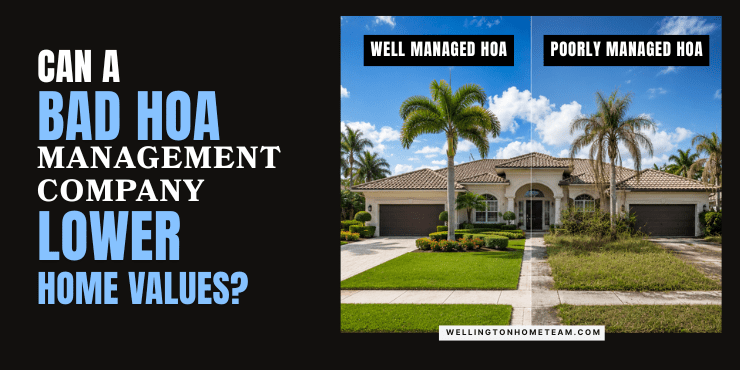
The short answer is yes. A bad HOA management company can absolutely lower your home value. Here is how it happens, what to watch for, and what you can do about it.
The Connection Between HOA Management and Home Value
An HOA management company handles the day to day operations of the community: collecting dues, maintaining common areas, enforcing covenants, managing vendor contracts, and communicating with residents. When that company does its job well, the neighborhood stays attractive, well maintained, and financially healthy, all of which support strong home value.
When management is weak, the effects show up slowly at first, then all at once. A neglected pool area, a backlog of unaddressed property violations, or a pile of unpaid vendor invoices might not seem like a big deal in isolation. Over time, though, these small failures compound into a community that looks and feels run down, and buyer perception starts to shift.
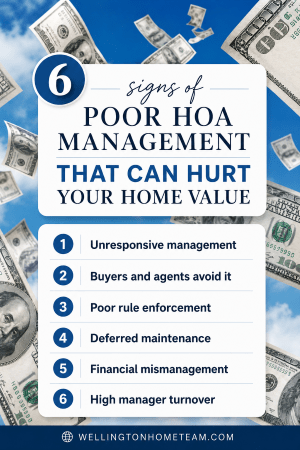
Signs of Poor Management That Hurt Home Value
Unresponsive Management Companies
A management company that does not answer calls, respond to emails, or address maintenance requests creates frustration for residents and red flags for buyers. During a real estate transaction, buyers and their agents often need documents, estoppel letters, or answers about the community’s finances and rules. If the management company is slow or impossible to reach, it can delay or even derail a sale.
Buyers and Agents Who Steer Clear
Real estate agents talk to each other, and word travels fast about which communities are difficult to work with. An HOA with a reputation for unresponsive management, confusing paperwork, or constant disputes becomes a community that agents education their clients about who inturn usually avoid. Fewer interested buyers means longer days on market and, eventually, lower offers.
Poor Enforcement of Community Rules
One of the most direct ways a management company affects home value is through enforcement, or the lack of it. When a manager fails to enforce parking rules, exterior maintenance standards, or landscaping requirements, the visual quality of the neighborhood declines. Overgrown yards, cars parked on lawns, peeling paint, and cluttered porches all send the same message to a potential buyer: this community is not being taken care of. Buyers notice.
Many appraisers factor curb appeal and neighborhood condition into value as well, so inconsistent enforcement can drag down home value for every house in the community, not just the ones out of compliance.
Deferred Maintenance on Common Areas and Homes
Pools, clubhouses, entrance signage, and shared landscaping are often the first things a buyer sees. When a management company delays repairs or cuts corners on upkeep to save money, those common areas start to look tired. Buyers touring a neighborhood with a cracked pool deck or dead landscaping often assume the rest of the community is managed the same way, even if individual homes are well maintained.
 The same problem shows up at the individual home level when a manager lets violations sit unaddressed. Black sidewalks, an unmowed lawn, a broken fence, or overgrown landscaping are all things the management company is responsible for flagging and following up on. When a manager lets these violations slide, month after month, those homes stay visible to every buyer touring the neighborhood, and they drag down the perceived condition of the entire community, not just the property in violation.
Additionally, one unmaintained home tends to turn into two, three, or four, because some homeowners adopt a mindset of “if they don’t spend time or money maintaining their home, why should I?” It becomes a plague on the neighborhood, spreading from one property to the next.
Financial Mismanagement
A management company is also responsible for helping the HOA budget properly and fund reserves for future repairs. If reserves are underfunded, homeowners can be hit with sudden, large special assessments. Buyers and lenders both review HOA financials during a purchase, and a community with a history of special assessments or low reserves can scare off buyers or make financing more difficult, both of which put downward pressure on resale value.
High Manager Turnover and Inconsistent Communication
Constant turnover in property managers leads to inconsistent enforcement, lost paperwork, and confusion among residents. Buyers researching a community often ask about how long the current management company has been in place and how communication has been handled. Instability here is another quiet signal that can affect a buyer’s confidence in the neighborhood.
Real Examples of HOA Management Affecting Home Value
These issues aren’t just theoretical, they play out in real transactions every day:
- A delayed response. When buyers are shopping for a home, they often have questions about the HOA, and when the property manager is unresponsive, most buyers move on to another community. If a manager doesn’t respond before the sale, the likelihood of them responding afterward is even lower.
- A surprise special assessment scares off buyers. A community with underfunded reserves suddenly needs a new roof on the clubhouse. A $4,000 special assessment gets announced mid-listing, and multiple interested buyers back out once they see it on the HOA disclosure.
- A neglected entrance reduces buyer traffic before they even park. Overgrown landscaping and a broken entrance sign create a poor first impression. Buyers touring the area may rule the community out before they’ve even seen a single home, simply based on how the entrance looks.
How Poor Management Affects Appraisals and Financing
HOA management problems don’t just make buyers uneasy, they can directly interfere with a sale. Lenders reviewing a condo or HOA governed property typically request HOA financial documents, reserve studies, and a certificate confirming the community meets lending guidelines. A disorganized or unresponsive management company can delay these documents, which delays closing.
Many appraisers also take the condition of common areas and the financial health of the HOA into account when comparing a property to similar homes in better managed communities. A community with a history of special assessments, pending litigation, or underfunded reserves can be flagged during the appraisal or lending review, sometimes resulting in a lower appraised value or a lender declining to finance the purchase altogether. For sellers, this can mean a shrinking pool of qualified buyers who are able to get financing at all.
Self Managed HOAs vs Professional Management Companies
Not every HOA hires an outside management company. Some are self managed by a volunteer board of homeowners. Both approaches can work well or poorly, but they carry different risks.
Self managed HOAs often benefit from board members who know the community personally and are motivated to keep it looking its best, but they can struggle with consistency, especially when volunteers have limited time or expertise in budgeting, contracts, or legal compliance. Professional management companies bring experience and resources, but the quality varies widely from one company to the next, and a company juggling too many communities may not give any single neighborhood the attention it needs.
For homeowners and buyers, the key isn’t necessarily which model a community uses, it’s how well that model is being executed. A well run self managed HOA can outperform a poorly run professional one, and the reverse is just as true.
Legal and Insurance Risks of Poor Management
Beyond curb appeal and financing, poor management can create legal and insurance exposure that affects the whole community. Deferred maintenance on shared structures like roofs, balconies, or retaining walls can lead to safety hazards, and if an injury or damage claim follows, homeowners can end up sharing the cost through special assessments or higher insurance premiums.
Inconsistent rule enforcement can also open the door to legal disputes. If a management company enforces a rule against one homeowner but ignores the same violation from another, it can be challenged as selective enforcement, leading to disputes that cost the HOA money in legal fees. Insurance carriers are also paying closer attention to HOA maintenance records, and communities with a poor track record can see premiums rise or coverage become harder to obtain, both of which are ultimately passed on to homeowners through higher dues.
Questions to Ask Before Buying Into an HOA
If you’re considering a home in an HOA governed community, a little research up front can save you from buying into a home value problem later. Before making an offer, ask your agent or the seller for:
- The name and contact information of the current management company, and how long they have held the contract.
- Recent HOA board meeting minutes, which often reveal ongoing disputes, maintenance issues, or complaints about management.
- The HOA’s most recent financial statements and reserve study, to check for underfunded reserves or a history of special assessments.
- Whether the community has any pending litigation involving the HOA or the management company.
- How rule violations are typically handled, and whether enforcement has been consistent across the community.
A community that can answer these questions clearly and provide documentation quickly is usually a good sign. Hesitation, missing records, or vague answers are worth taking seriously.
What Homeowners Can Do to Protect Their Home Value
Homeowners are not powerless here. A few practical steps can help protect the community, and individual home value, from the effects of poor management:
- Attend HOA board meetings and stay informed about who the management company is and how it is performing.
- Request copies of financial statements and reserve studies to check for red flags.
- Encourage the board to set clear performance expectations and response time standards for the management company.
- If problems persist, support the board in putting the management contract out to bid with other qualified companies.
- Maintain your home. If you maintain your home, it’s one less thing the property manager has to babysit, which frees them up to spend time on other things that protect the community’s value.
Final Thoughts
A well run HOA management company protects your investment by keeping the neighborhood attractive, enforcing rules fairly, and managing finances responsibly. A bad one can quietly chip away at your home value through unresponsiveness, inconsistent enforcement, neglected common areas, and financial instability that follows buyers all the way to the closing table. If you are buying, selling, or already living in a community with an HOA, it pays to understand who is managing it and how well they are doing their job.
Frequently Asked Questions
Can a bad HOA management company really lower my home value?
Yes. Poor communication, weak rule enforcement, and neglected common areas can make a community less attractive to buyers, which can slow sales and reduce offers.
Do real estate agents avoid HOA communities with poor management?
Many do. Agents often educate clients about communities known for unresponsive management or ongoing disputes, since these issues can complicate or delay a transaction.
What should I check about HOA management before buying a home?
Ask for recent meeting minutes, financial statements, reserve fund balances, and the management company’s contact information. This can reveal how well the community is being run.
Can homeowners change a bad management company?
Yes. The HOA board typically has the authority to put the management contract out to bid or terminate it if performance does not improve, usually with input or approval from homeowners.
Does poor rule enforcement affect every home in the neighborhood, not just non compliant ones?
Yes. Inconsistent enforcement affects the overall appearance and reputation of the community, which can influence buyer perception and home value for every house in the neighborhood.
Can HOA management problems affect my ability to get financing?
Yes. Lenders review HOA financial documents and reserve studies before approving a loan, and issues like underfunded reserves or pending litigation can delay or complicate financing.
Is a self managed HOA better than one with a professional management company?
Not necessarily. What matters most is how well the HOA is being run, whether by a volunteer board or a professional company, not which model it uses.
How does HOA management affect property value?
HOA management affects property value through the things buyers and lenders can see and verify: how well common areas are maintained, how consistently rules are enforced, how healthy the reserve fund is, and how quickly the company responds to document requests during a sale. Weakness in any of these areas can slow sales or reduce offers.
Please consider spreading the word and sharing; Can a Bad HOA Management Company Lower Home Values?
See how a bad HOA management company can lower home value through poor enforcement, delayed estoppels, underfunded reserves, and neglected common areas. #realestate #badhoaAbout The Author
Written by Michelle Gibson, a Wellington Realtor who has specialized in residential real estate throughout Palm Beach County since 2001. With more than two decades of experience, Michelle helps buyers and sellers make informed real estate decisions using local market knowledge, proven strategies, and clear, honest advice.
Her expertise includes Wellington’s neighborhoods, gated communities, equestrian properties, HOA communities, and surrounding Palm Beach County markets.
Areas of service include Wellington, Lake Worth, Royal Palm Beach, Boynton Beach, West Palm Beach, Loxahatchee, Greenacres, and more.