
Decluttering Before and After Moving: Complete Guide
Decluttering before you move is one of the most overlooked steps in the moving process, yet it can save money, reduce packing time, lower moving costs, and make settling into your new home much easier. Whether you’re downsizing, relocating across town, or moving long distance, removing unwanted belongings before packing means fewer boxes and less stress throughout the process.
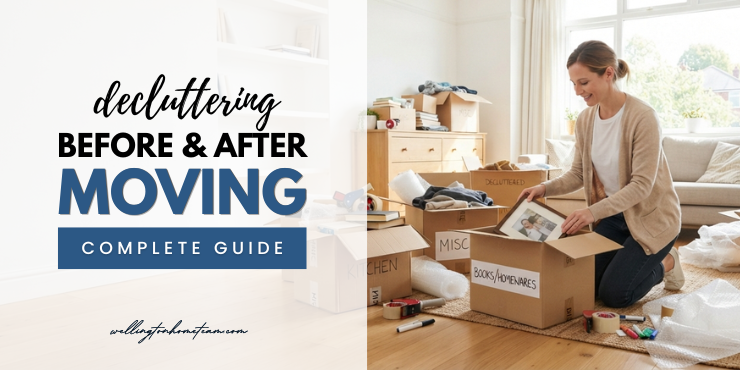
In this guide, we’ll cover why decluttering before your move matters, how it can genuinely save you money(opens in new tab), practical methods for getting through it room by room, and why the decluttering shouldn’t stop once you’ve unpacked the last box.
Moving consistently ranks among life’s most stressful events, and having too much stuff to sort through is a big part of why. A clear plan for decluttering turns an overwhelming task into a series of small, manageable decisions.
Quick Decluttering Checklist Before Moving
- Discard Broken or Unusable Items
- Recycle Old Paperwork
- Donate Clothes You Haven’t Worn in a Year
- Sell Valuable Furniture You Don’t Need
- Use Up Pantry Items
- Pack Sentimental Items Last
- Schedule a Donation Pickup
- Dispose of Hazardous Waste Properly
- Label Every Box
- Declutter One Room at a Time
Why Decluttering Before Moving Is Important
- Reduces Moving Costs: The less you have to move, the less you pay for packing supplies, labor, and transportation. Professional movers often charge based on the volume and weight of your belongings, so a lighter inventory means a cheaper move.
- Simplifies Packing and Unpacking: When you declutter, you’re left with only the items you truly need or value, making packing faster and unpacking equally efficient once you’re in your new home.
- Minimizes Stress and Anxiety: Moving is inherently stressful, but an organized, clutter-free environment reduces anxiety and gives you a greater sense of control over the process.
- Provides a Fresh Start: Moving often symbolizes a new chapter. Decluttering gives you the chance to let go of items that no longer serve you and make room for what’s next.
- Improves Health and Safety: Clutter can pose real health and safety hazards(opens in new tab), from tripping risks to dust and allergen buildup. Decluttering means a safer, healthier environment for you and anyone helping you move.
How Decluttering Saves Money on Moving Costs
Decluttering isn’t just about a tidier home, it directly affects your bottom line in a few concrete ways:
- Fewer Packing Materials: Fewer belongings means fewer boxes, less tape, less bubble wrap, and less packing paper. If you get rid of enough to eliminate several boxes’ worth of stuff, the savings on materials alone add up quickly.
- Lower Mover or Truck Rental Costs: Professional movers typically price by volume or weight, and a lighter load can mean a smaller truck, fewer movers, and less time on the clock, all of which lower your final bill.
- Less Spent on Consumables: A couple of weeks before your move, work through your pantry, fridge, and freezer, and use up what you have rather than buying more. The same goes for bathroom toiletries. Save the shopping trips for after you’ve moved.
- Turn Clutter Into Cash: Selling items you no longer need, through a garage sale or an app like Facebook Marketplace, can offset other moving expenses. Some people turn it into a small event, a last chance to say goodbye to neighbors before the move.
How To Declutter Before Moving
- Start Early: Begin well in advance of your move so you’re not rushing through decisions under time pressure.
 Sort by Category, Not Room: Tackle items by category, clothing, then books, then kitchenware, and so on. Seeing everything you own of one type at once makes it easier to spot what you don’t need.
- Use the Four-Box Method: Label four boxes Keep, Donate, Sell, and Trash, and sort every item into one of them as you go. This forces a real decision on each item instead of letting things pile up in limbo.
- Be Ruthless: It’s easy to hold onto things “just in case.” Be honest about what you actually use. Anything untouched in the past year is a strong candidate for donation or sale, and it’s often cheaper to rebuy an item later than to pay to move and store it for years on the off chance you’ll need it.
- Handle Paperwork Separately: Shred or recycle anything you don’t need to keep. Old paperwork is one of the easiest categories to let pile up indefinitely.
- Dispose Responsibly: Recycle where you can, donate gently used items to local charities or shelters, and never throw paint or other chemicals in with regular trash. For a larger clean-out, a dumpster rental(opens in new tab) can make short work of items that aren’t sellable or donatable, and a self-storage unit can help if you need somewhere to stage items you’re still deciding on.
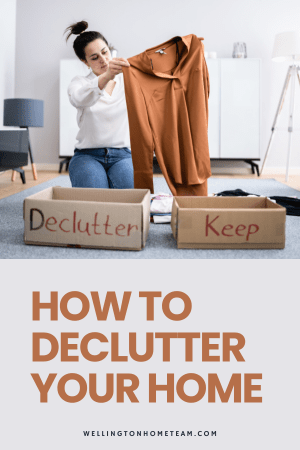 Sort by Category, Not Room: Tackle items by category, clothing, then books, then kitchenware, and so on. Seeing everything you own of one type at once makes it easier to spot what you don’t need.
What to Keep, Donate, Sell, or Throw Away
| Keep | Donate | Sell | Throw Away |
|---|---|---|---|
| Daily essentials | Clothes in good condition | Furniture | Broken items |
| Important documents | Toys | Electronics | Expired food |
| Sentimental items | Books | Appliances | Damaged decor |
How Long Does It Take to Declutter?
| Home Size | Typical Time |
|---|---|
| Apartment | 1 to 2 Weeks |
| Small House | 2 to 4 Weeks |
| Large House | 4 to 8 Weeks |
Room-by-Room Decluttering Guide
Sorting by category works well for a first pass, but a room-by-room checklist catches things a category list can miss:
- Kitchen: Toss expired food, donate duplicate cookware, and use up pantry items before you pack the rest.
- Bedroom: Donate clothes you don’t wear, get rid of worn-out shoes, and reduce extra bedding down to what you’ll actually use.
- Bathroom: Dispose of expired medication properly, toss old cosmetics, and use up half-empty toiletries rather than packing and moving them.
- Garage: Dispose of paint and chemicals properly, recycle what you can, and donate tools you no longer use.
- Home Office: Shred paperwork you don’t need, scan important documents to keep digitally, and recycle old electronics.
Common Decluttering Mistakes
A few habits tend to undo all the benefits of decluttering before a move:
- Waiting Until Moving Week: Rushed decisions mean more things get kept “just in case” simply because there’s no time to think it through.
- Packing First, Sorting Later: This just moves your clutter problem to your new address instead of solving it.
- Paying to Move Broken Furniture: If it’s not worth fixing, it’s not worth the cost of moving it.
- Keeping Duplicates: Extra kitchen gadgets, tools, and linens rarely get used twice as often just because you own two.
- Forgetting Storage Areas: Attics, basements, and garages are the first places to get skipped and the ones that tend to hide the most clutter.
- Saving Everything “Just in Case”: If you haven’t used it in a year, the odds you’ll need it soon are low.
Decluttering When Downsizing
If you’re moving into a smaller home, condo, or retirement community, decluttering becomes even more important, not just a nice-to-have. Measure your new space and your existing furniture before you pack, prioritize what you use daily over what you merely like having, and avoid paying to move oversized pieces that simply won’t fit. It’s easier to part with something before the move than to discover on move-in day that it doesn’t work in the new space.
Should You Use a Storage Unit?
Storage can be a useful bridge, but it’s worth asking honestly whether an item earns its monthly rent. Storage makes sense for genuinely seasonal items or a short gap between homes. It makes less sense as a long-term home for things you were on the fence about keeping in the first place, since storage fees add up quietly over time. If you do need a temporary place to sort or stage items, a self-storage unit can be a helpful middle step during the process.
Choosing the Best Time to Move To Save Money
Timing affects your moving costs more than most people expect. Summer is the busiest and most expensive season to move, so shifting your date to fall, winter, or early spring can lower your quote. Even within a month, moving mid-month rather than at the very beginning or end, and on a weekday rather than a weekend, typically costs less since demand is lower.
Tips for Hiring Professional Movers
Even with professional movers, there’s room to control costs:
- Get Multiple Quotes: Aim for at least three quotes from different companies, and ask for in-person estimates rather than relying only on online cost calculators(opens in new tab), since in-person estimates tend to be more accurate.
- Compare Like for Like: Companies price differently, so make sure you understand exactly what’s included in each quote before comparing them side by side.
- Read the Contract Closely: Watch for fees that aren’t obvious upfront, like staircase surcharges or parking permit costs.
- Consider Specialists for Long-Distance Moves: If you’re moving long distance(opens in new tab), a company with specific experience in interstate logistics can save you headaches, even if it’s not the cheapest quote. Our guide to choosing a moving company is a good starting point.
- Understand Your Insurance Options: Released Value coverage, the minimum level included by default, only covers a small, government-set amount per pound per item. If your belongings are worth more than that, ask about additional coverage.
DIY Moves vs. Hiring Professionals
Whether to move yourself or hire professionals is its own decision with real tradeoffs in cost, effort, and time. Our full DIY vs. professional movers comparison walks through the pros, cons, and hybrid options in depth, including the middle-ground approach of packing yourself and hiring movers just for the heavy lifting.

A Note on Moving Expenses and Taxes
It’s worth knowing upfront: the federal tax deduction for moving expenses was permanently eliminated for most civilians by the One Big Beautiful Bill Act, signed in 2025. It’s now limited to active-duty military members moving under a permanent change of station, and, starting with the 2026 tax year, certain intelligence community members.
A handful of states, including California, New York, New Jersey, Massachusetts, Pennsylvania, Arkansas, and Hawaii, still allow moving expense deductions on state returns even though the federal deduction is gone. Charitable donations of items you declutter are a separate matter and generally remain deductible if you itemize, so keep receipts from any donation drop-offs. This isn’t tax advice, check with a tax professional for guidance specific to your situation.
The Importance of Decluttering After Moving
Decluttering after you move is just as valuable as decluttering before, and it’s easy to skip once you’re tired of dealing with boxes.
- Enhances Organization: Fewer items to manage makes it easier to keep your new home tidy and functional from the start, the same principle that makes a well-staged home feel more spacious to buyers.
- Prevents Overcrowding: This matters especially if you’ve downsized to a smaller space than your last home.
- Promotes Mental Well-Being: A clutter-free environment has been linked to lower stress and a more peaceful living space.
- Helps You Adapt: Unpacking is a natural opportunity to re-evaluate what you own and make sure your new home reflects your current needs, not your old ones.
Tips for Post-Move Decluttering
- Unpack Methodically: Go room by room and category by category rather than opening boxes at random.
- Re-Assess Each Item: It’s common to unpack something you packed out of habit and realize you don’t actually need it in your new space. Donate or sell it rather than finding it a spot out of inertia.
- Create a Storage System Early: Bins, shelves, and organizers set up early make it far easier to stay organized once you’re settled. Once your home is decluttered, it’s also a good time to think about refreshing your space.
- Make Decluttering a Habit: Set aside time every few months, or tackle one room every couple of months, to review and purge items that are no longer useful.
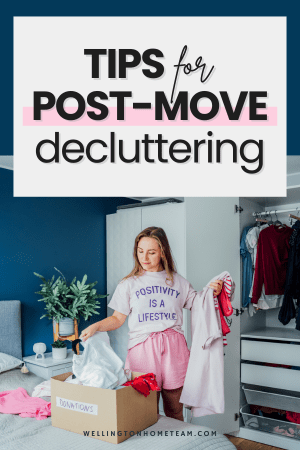 Unpack Methodically: Go room by room and category by category rather than opening boxes at random.
Frequently Asked Questions
How far in advance should I start decluttering before a move?
Start at least four to six weeks before your move if you can. It gives you time to sort thoughtfully instead of rushing decisions in the final days.
What is the four-box method?
It’s a simple decluttering system where you label four boxes Keep, Donate, Sell, and Trash, and sort every item into one as you go, so nothing gets left in limbo.
Does decluttering really save money on moving costs?
Yes. Since movers typically price by weight or volume, fewer belongings usually means a smaller truck, fewer movers, less time on the job, and less spent on packing materials.
Can I still deduct moving expenses on my taxes?
For most civilians, no. The federal moving expense deduction was permanently eliminated in 2025, with exceptions only for active-duty military and certain intelligence community members. A few states still allow it on state returns. Charitable donations from decluttering are generally still deductible if you itemize.
What should I do with items I don’t want to keep?
Sort them into sell, donate, or dispose of. Online marketplaces work well for higher-value items, local charities are a good fit for gently used goods, and a dumpster rental can help clear out anything left over during a larger cleanout.
Should I declutter before or while packing?
Before. Decluttering while you pack tends to result in more “keep it just in case” decisions made under time pressure, and you end up paying to move things you were on the fence about anyway.
Should I sell or donate unwanted items?
Sell higher-value items like furniture, electronics, and appliances if you have the time to list them. Donate everything else, clothes, books, and household goods rarely sell for enough to justify the effort compared to a quick donation drop-off.
What shouldn’t I throw away before moving?
Hazardous materials like paint, batteries, and cleaning chemicals need proper disposal rather than the regular trash. Important documents, sentimental items, and anything with resale value are also worth a second look before the trash pile.
Is it worth hiring a professional organizer?
For a large home or a particularly overwhelming decluttering job, a professional organizer can save real time and keep the process from stalling out. For most moves, the tips above are enough to get through it on your own.
How long does it take to declutter a house before moving?
It depends on the size of your home and how much you’ve accumulated. An apartment might take one to two weeks, while a large house can take four to eight weeks if you’re starting from scratch.
Final Thoughts
Decluttering before and after moving is more than a practical task, it’s a genuine opportunity to lower your moving costs and settle into a more organized, less stressful home.
Pair it with our complete moving checklist and our guide to finding moving boxes to keep the rest of your move on track, and don’t forget you can often donate items locally rather than tossing them out. Remember, every item you choose not to move is one less item to pack, transport, unpack, and find space for in your new home.
Please consider spreading the word and sharing; Decluttering Before and After Moving: Complete Guide
Declutter before and after moving to save money, pack faster, and reduce stress. Get a checklist, room-by-room tips, and what to keep, donate, or sell. #moving #declutteringAbout the Author
Wellington Realtor Michelle Gibson wrote this guide to help her clients declutter smarter and spend less on their moves.
Michelle has been specializing in residential real estate since 2001 throughout Wellington Florida and the surrounding area. Whether you’re looking to buy, sell, or rent she will guide you through the entire real estate transaction. If you’re ready to put Michelle’s knowledge and expertise to work for you, call or e-mail her today.
Areas of service include Wellington, Lake Worth, Royal Palm Beach, Boynton Beach, West Palm Beach, Loxahatchee, Greenacres, and more.