
What to Know Before Buying a Fixer-Upper
Buying a fixer-upper can be a great way to purchase a home below the cost of a fully renovated property, but only if you understand what you are getting into. The purchase price is just the beginning. Renovation costs, permits, inspections, insurance, carrying costs, and unexpected repairs can quickly turn an inexpensive house into an expensive mistake.
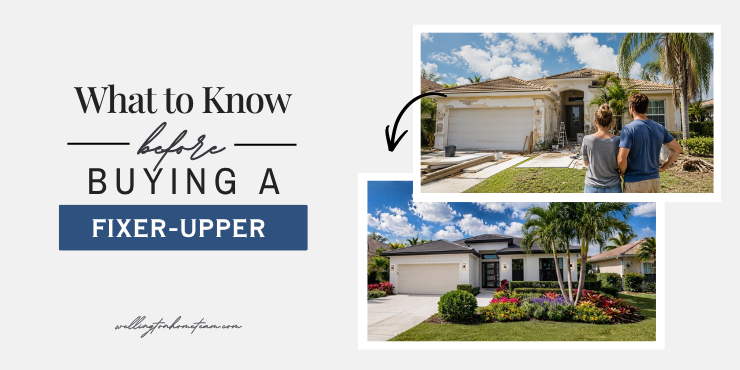
Before you get into the buying process, it helps to understand where a property falls on the spectrum from cosmetic updates to major repairs, from a light refresh to a home that needs work on its major systems. Once you know what qualifies as a fixer-upper, the rest of this guide walks through the buying decision itself.
1. Decide How You Plan to Use the Property
Determining whether you are going to flip, rent, or live in the property is a must before you start seriously evaluating homes. The amount of experience, money, and time you have is another key factor.
Perhaps you have a lot of experience renovating homes, or maybe you are a newcomer. Either way, planning gives you a better understanding of the costs and work involved. Create a plan for potential properties rather than buying a home because the price was good and figuring out the plan afterward.
If renting is part of the plan, especially as a short-term or Airbnb rental, the numbers work differently than a flip or a long-term hold, so run those separately before you commit to a strategy.
Experienced investors are generally better equipped to take on riskier projects because they know the pitfalls that come up when buying a fixer-upper. If you are a first-time renovator, avoid a house with too many unknowns. Buying a property that needs far more money than you accounted for can turn into a financial burden you are paying off for years.
2. Know Your Renovation Limits
Be honest about the work you are capable of doing yourself. Do you have the time and the skills to do a good job, or are you counting on friends or family to help who may not follow through?
If you are hiring contractors, pick a team that will do the work properly. The cheapest bid is not always the best one. A contractor who cuts corners can cost you more later, and you may discover the correct permits were never pulled. Problems like that tend to surface at the worst possible time, when you are ready to sell.
3. Choose the Right Neighborhood
Some neighborhoods have a steady supply of properties that need renovation. That can mean a good deal, or it can mean the area simply is not appreciating. A cheap property in a neighborhood with a lot of deferred maintenance may be hard to resell for what you need, even after a full renovation.
The real question is not just whether it is a good neighborhood. It is whether the finished house will be worth enough in that neighborhood to justify the renovation. Look at comparable renovated homes, recent sale prices, and how long similar homes are sitting on the market. If renovated homes nearby are not actually selling for the price you are projecting, the numbers will not work no matter how good the renovation is. This is also where over-improving becomes a real risk. High-end finishes in a modest neighborhood rarely get fully recouped.
4. Evaluate the Property’s Condition
The scope of repairs, whether a property needs mostly cosmetic updates or falls into major repairs and systems work, changes everything else on this list, from financing to your timeline.
A house with an ugly kitchen, outdated bathrooms, old flooring, and bad paint can be a much better fixer-upper than a house with a new kitchen but a failing roof, an outdated electrical panel, foundation problems, or extensive water damage. Cosmetic problems and major system problems are not the same risk category, even when the repair estimate looks similar on paper.
In Wellington and the rest of Palm Beach County, pay particular attention to roof age and condition, wind mitigation features, flood zone status, and the age of the HVAC system. These can affect both your renovation budget and the cost and availability of homeowners insurance, which matters more here than in most parts of the country.
5. Get a Thorough Home Inspection
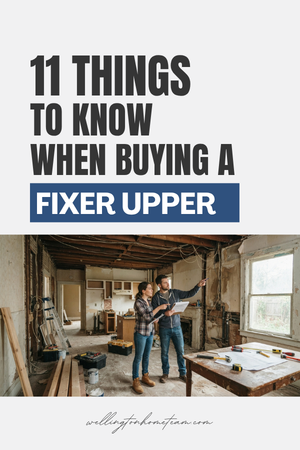
A home inspection on a fixer-upper is not there to tell you whether the house is a good deal. It is there to help you identify the scope and likely cost of the problems, from minor cosmetic items to the kind of issues commonly found during home inspections, so your budget is based on the property’s actual condition instead of a guess.
Depending on the property, you may also need separate evaluations for wood-destroying organisms and termites, roof condition, HVAC, plumbing or sewer lines, the electrical system, structural concerns, mold, the pool, or a septic or well system. Each of these can uncover costs a general inspection will not catch.
6. Check Permits Before You Buy
A fixer-upper can become a real headache if previous work was never properly permitted. Before you commit, look into whether the home has open permits, unpermitted additions, a converted garage, or electrical, plumbing, roof, or HVAC work that was never signed off on. If you are planning renovations of your own, confirm with the local building department what will require a permit so you are not caught off guard mid-project.
7. Get Realistic Renovation Estimates, and Budget a Contingency
Once you have a home that fits your plan, get real numbers from contractors rather than estimating on your own. Renovation costs are never exact; something almost always turns up once walls, ceilings, or flooring are opened up.
Many buyers and investors set aside roughly 15 to 20 percent or more of the renovation budget for unexpected expenses, depending on the property’s condition and the scope of work. Treat that as a starting point, not a guarantee, and adjust it based on how much uncertainty the inspection turned up.
8. Calculate Your Total Investment, Not Just the Purchase Price
Investors often use ARV and the 70 percent rule as a quick screening method for what to pay upfront. Once you are past that initial screen and seriously evaluating one property, it helps to add up the full picture:
- Purchase price
- Renovation costs
- Closing costs
- Financing costs
- Carrying costs
- Renovation contingency
For example: a $350,000 purchase price, $75,000 in renovations, $10,000 in closing and other costs, $15,000 in carrying costs, and a $15,000 contingency puts your total investment around $465,000. If comparable renovated homes nearby are selling for $475,000, a $10,000 spread is probably too thin to justify the risk. Run this math before you get emotionally attached to a property.
A fixer-upper can look cheaper than building a brand new home at first glance, but demolition and other renovation-specific costs can close that gap more than people expect, so it is worth running both numbers side by side.
9. Factor In Carrying Costs and Timeline
No matter whether you flip, rent, or plan to live in the home, owning it is not free while the work is happening. Even a cash purchase still comes with homeowners insurance, property taxes, electric, water, and HOA dues. Do not assume you will sell or rent the home immediately once renovations wrap up. It can take several weeks or months, which adds more overhead on top of the renovation budget itself.
Also account for how long the renovation will realistically take. Delays can increase financing, insurance, utility, property tax, and other carrying costs, while also pushing back when you can sell, rent, or move into the property.
10. Confirm You Can Insure the Property
Do not assume homeowners insurance will simply be available after closing. For an older home or one with significant deferred maintenance, especially an aging roof or outdated electrical system, confirm that coverage is available and get an insurance quote before you are locked into the purchase. In Florida, this step alone can make or break whether a fixer-upper is financially workable.
11. Know When to Walk Away
Some of the best fixer-upper decisions are the ones you do not make. Consider walking away when the renovation costs are too uncertain, major structural problems turn up, you cannot get affordable insurance, there are significant unpermitted improvements, or the finished value simply does not justify the investment. The same goes if you do not have adequate cash reserves, the timeline does not fit your situation, or the plan only works if everything goes perfectly. A fixer-upper that requires more time, money, or experience than you realistically have is not a deal. It is a liability.
Frequently Asked Questions
How much extra should I budget for unexpected repairs on a fixer-upper?
Many buyers and investors set aside roughly 15 to 20 percent or more of the renovation budget for unexpected expenses, depending on the property’s condition and how much uncertainty the inspection turned up. Older homes and homes with unpermitted work generally warrant a larger buffer.
What should I have inspected before buying a fixer-upper?
Beyond a general home inspection, ask about wood-destroying organisms and termites, roof condition, HVAC, plumbing or sewer lines, the electrical system, structural concerns, mold, and, where applicable, the pool or septic system.
How do I know when to walk away from a fixer-upper?
Walk away when the repair costs are too uncertain, major structural or system problems turn up, insurance is not affordable, there is significant unpermitted work, or the finished value would not justify the total investment.
Can I get a mortgage or renovation loan for a fixer-upper?
Yes. Some buyers use renovation loan programs that allow qualified borrowers to finance eligible improvements as part of the mortgage. Requirements vary by loan program, borrower qualifications, and the property, so speak with a lender before assuming a fixer-upper will qualify.
What permits should I check before buying a fixer-upper?
Look for open permits, unpermitted additions, a converted garage, and any electrical, plumbing, roof, or HVAC work that may not have been properly permitted. Unpermitted work can complicate both financing and a future resale.
Final Thoughts
If the numbers work and you are able to make a profit, or simply end up with a home you love for less than a move-in-ready equivalent, buying a fixer-upper can absolutely be worth it. There will be hard work ahead; renovating a home is never as easy as it looks on TV. But if you have worked through the condition, the permits, the insurance picture, and the true total investment, you will be in a much better position to know whether a specific fixer-upper is worth buying.
Please consider spreading the word and sharing; What to Know Before Buying a Fixer-Upper
Buying a fixer-upper isn't for everyone, so it's important for buyers to know what they're getting into before it's too late and they buy a money pit. #realestate #homebuying #fixerupperAbout the Author
Top Wellington Realtor, Michelle Gibson, wrote: “What to Know Before Buying a Fixer-Upper”
Michelle has been specializing in residential real estate since 2001 throughout Wellington Florida and the surrounding area. Whether you’re looking to buy, sell, or rent she will guide you through the entire real estate transaction. If you’re ready to put Michelle’s knowledge and expertise to work for you call or e-mail her today.
Areas of service include Wellington, Lake Worth, Royal Palm Beach, Boynton Beach, West Palm Beach, Loxahatchee, Greenacres, and more.