
WDO Inspection in Florida: Cost & Coverage
If you are buying a home in Florida, you will likely hear the term WDO inspection during your inspection period. A WDO inspection, sometimes informally called a termite inspection, is a specialized inspection performed by a licensed pest control operator to identify evidence of wood destroying organisms, including termites, wood decay fungus, and other pests that can damage a home’s structure.
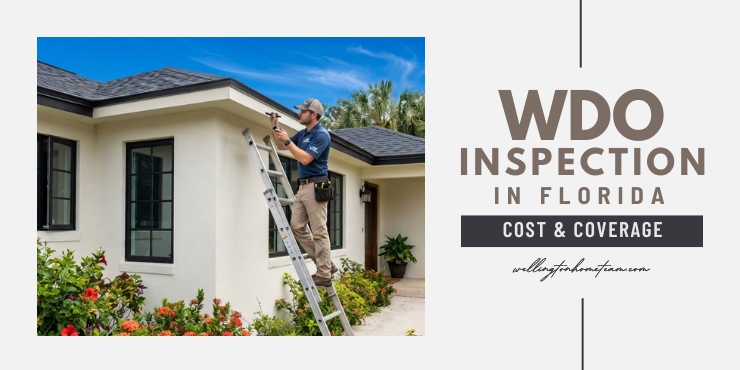
Most buyers assume “WDO inspection” is just another name for a termite inspection. That assumption is close, but it is not quite accurate. A WDO inspection covers termites along with several other organisms, and it functions as its own distinct step in the Florida real estate process, separate from a general home inspection.
Here is what a WDO inspection covers, why it matters more in Florida than in most other states, who orders it, what it costs, and what happens if something turns up.
Quick Answer: What Is a WDO Inspection in Florida?
A WDO inspection is a specialized inspection performed by a licensed pest control operator to identify evidence of termites, wood destroying insects, and wood decay fungus that may affect a home’s structure. Unlike a general home inspection, it focuses specifically on organisms and damage involving wood, and it results in a standardized state report used by lenders and title companies.
What Does WDO Stand For?
WDO stands for Wood Destroying Organism. The name refers to the inspection itself rather than a single pest, since it covers several types of organisms rather than termites alone.
Florida uses a standardized Wood-Destroying Organisms Inspection Report, commonly referred to as the WDO report, known by form number FDACS-13645. The form is issued through the Florida Department of Agriculture and Consumer Services and is widely used in real estate transactions throughout the state, including by most lenders and title companies. Because the form is standardized statewide, it carries more weight than a general opinion, becomes part of the closing file, and is often required before a loan can be approved.
It Is Not Just About Termites
Florida’s warm, humid climate is friendly to more than one type of wood destroying pest, so the inspection casts a wider net than termites alone. A WDO inspection typically looks for evidence of: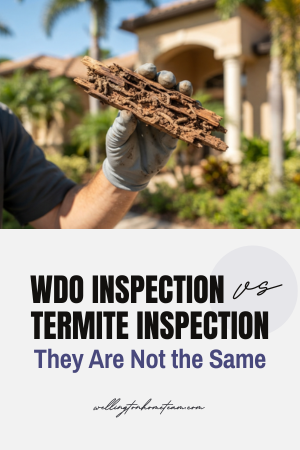
- Subterranean termites, the most common wood destroying pest in Florida, which build mud tubes and live in colonies underground
- Drywood termites, which infest wood directly without needing soil contact and are common in older Florida homes
- Powderpost beetles, which leave small round exit holes and fine powdery frass in wood framing or furniture
- Wood decaying fungi, sometimes called wood rot, which break down wood through moisture exposure rather than insect activity
- Old house borers, less common but still on the list of organisms inspectors are trained to identify
Since the inspection covers all of these organisms rather than termites exclusively, calling it a termite inspection undersells what the inspector is actually checking for.
Why WDO Inspections Matter More in Florida
Florida’s climate creates especially favorable conditions for termites and wood decay compared with many parts of the country. Consistent warmth, high humidity, heavy rainfall, irrigation systems running near foundations, and landscaping planted close to structures all add up to conditions where wood destroying organisms can thrive twelve months a year rather than going dormant over a cold winter. States like Louisiana, Texas, and other parts of the Southeast see significant termite pressure too, but Florida’s year round activity is a big part of why WDO inspections are treated as routine here rather than optional.
In South Florida specifically, homes deal with near constant moisture exposure, dense subterranean termite populations, and drywood termite activity that can affect even newer construction. That combination is a big part of why WDO inspections are so much more common and so much more scrutinized here than in many other parts of the country.
Common WDO Issues Found in South Florida Homes
Because of local conditions, certain patterns show up more often than others in Palm Beach County homes. Common findings include:
- Termite damage around garage door frames, where wood meets concrete and moisture tends to collect
- Wood rot around exterior doors and windows, especially on older homes with original wood trim
- Moisture damage near HVAC drain lines that have leaked over time
- Fungus growth caused by poor drainage or grading that pushes water toward the foundation
- Damage around soffits and fascia boards, which are exposed to weather and often overlooked
- Drywood termite activity in older wood components, including attic framing and trim
How Is a WDO Inspection Different From a Home Inspection?
This is where a lot of the confusion comes from, so it is worth spelling out clearly. If you have read our article on common problems found during home inspections, you already know a general home inspection covers the roof, electrical, plumbing, HVAC, structure, and appliances.
A WDO inspection is narrower and more specialized. The inspector is not evaluating the water heater or checking outlets. They are specifically looking for visible signs of wood destroying organisms and the damage they leave behind, such as mud tubes, exit holes, frass, sagging or spongy wood, and evidence of past treatment like drill holes from previous chemical applications.
A few key differences worth knowing:
- A home inspector and a WDO inspector are usually different people with different licenses in Florida
- The WDO report is a standardized state form, while home inspection reports vary by company
- WDO inspections are frequently required by lenders, especially on VA loans, while general home inspections are optional but strongly recommended
- A WDO inspection can sometimes be scheduled alongside a general home inspection if the same company offers both services, but the report itself is still a separate document
What a WDO Inspection Does Not Cover
It is just as important to understand what falls outside the scope of a WDO inspection. According to the official state form, the inspection is based only on what is visible and readily accessible at the time of the visit, and it specifically excludes areas that are enclosed, concealed by wall or floor coverings, or would require removing or defacing part of the structure to access. A WDO inspection also does not evaluate:
- Roof condition
- Electrical systems
- Plumbing
- HVAC equipment
- Appliances
- Foundation problems unrelated to wood destroying organisms
- Mold or indoor air quality, beyond wood decaying fungi specifically
- General safety concerns
This is exactly why a WDO inspection is not a substitute for a general home inspection. The two serve different purposes, and most Florida buyers benefit from having both.
Who Orders a WDO Inspection, and When?
In most Florida transactions, the buyer orders the WDO inspection during the inspection period, similar to how a general home inspection is arranged. There are a few situations where it becomes closer to mandatory.
 VA loans typically require a termite or WDO inspection in Florida because of the state’s termite risk and VA minimum property requirements, and the seller is generally expected to cover the cost under VA guidelines, though this can still vary based on the contract and local custom.
Many conventional and FHA lenders also request a WDO report before closing, particularly on older homes or homes with a crawl space. Cash buyers are not required to get one, but skipping it on an older home is a risk worth thinking through given how expensive structural termite damage can be to repair.
Timing usually falls within the same inspection window used for the general home inspection, so buyers can coordinate both without adding extra days to the contract. If you want a fuller picture of how this step fits into a Florida purchase, our guide to buying a house in Florida walks through the process from offer to closing. WDO inspections are also just one of several Florida specific inspections buyers run into, alongside things like a wind mitigation inspection.
What Happens During the Inspection?
A licensed WDO inspector walks the interior and exterior of the home, checking accessible areas including the attic, crawl space if there is one, garage, exterior walls, and any wood trim or framing that can be reached without removing drywall or other finished surfaces. They are looking for physical evidence, not just live insects, since termites and other organisms are not always active or visible at the moment of inspection.
The inspector documents any visible damage or activity, notes any evidence of prior treatment, and completes the WDO report. If active infestation or damage is found, the report will state that clearly, which then opens the door to further negotiation between buyer and seller.
What Happens If a WDO Inspection Finds Termites or Damage?
Finding evidence of wood destroying organisms does not automatically kill a deal, but it does change the conversation. Can a home fail a WDO inspection? Not technically. There is no pass or fail designation on the report itself, only documentation of what was found. Depending on what is found, next steps typically include:
- Treatment by a licensed pest control company, which is often required before closing if a lender is involved
- Repair of any structural damage caused by the organisms, which may need a contractor rather than just a pest control company
- Negotiation between buyer and seller over who pays for treatment and repairs
- A follow up inspection or clearance letter confirming the issue has been resolved
Buyers sometimes assume any termite finding is a deal breaker. In practice, treated and repaired termite damage is common in Florida real estate, and many homes with a past infestation are perfectly sound once the issue has been addressed. It is currently active, untreated infestation or significant structural damage that tends to cause bigger problems, similar to some of the issues we cover in our article on why buyers walk away after inspections.
Who Pays for a WDO Inspection in Florida?
This is negotiable and varies by transaction type. On VA loans, the seller is generally expected to pay for the WDO inspection itself under VA guidelines, although local custom and contract terms can still shift this. On conventional and FHA purchases, it is often negotiated as part of the purchase contract, and buyers frequently cover the cost of the inspection itself while treatment costs, if needed, get negotiated separately.
The inspection itself is typically a modest flat fee, usually less than the cost of a general home inspection, since it is a narrower and faster process. Exact pricing varies by region, home size, and whether a crawl space is involved, so it is worth getting a current quote from a local licensed pest control company rather than relying on a fixed number. Treatment costs, if activity is found, are separate and depend heavily on the extent of the problem, ranging anywhere from a localized spot treatment to a full structural treatment on a larger infestation.
Tips for Buyers and Sellers
A few practical points worth keeping in mind on either side of the transaction:
- Sellers can get ahead of the process by scheduling a WDO inspection before listing, which avoids surprises during a buyer’s inspection period
- Buyers should request the WDO report in writing and keep it with their closing documents, since lenders will often require it on file
- Ask whether the home has ever had prior termite treatment, since a treated and documented history is generally far less concerning than an undisclosed issue
- Coordinate the WDO inspection with the general home inspection when possible to save time during the inspection period, and review it alongside your final walk through before closing
- First time buyers budgeting for closing should factor the WDO inspection into their broader list of unexpected home buying expenses
- Remember that a WDO report only reflects the day it was performed. It is not a guarantee against future infestation
Frequently Asked Questions
Is a WDO inspection the same as a termite inspection?
Not exactly. A termite inspection typically looks only for termites, while a WDO inspection covers termites along with other wood destroying organisms such as powderpost beetles and wood decaying fungi. In everyday conversation, people often use the terms interchangeably, but the official WDO report is broader in scope.
Is a WDO inspection required in Florida?
It is typically required for VA loans and frequently requested by other lenders, but it is not mandated by Florida law for every real estate transaction. Cash buyers and some conventional buyers can choose to skip it, though most real estate professionals recommend getting one, especially on older homes.
How long is a WDO report valid?
Many lenders require the WDO inspection to be completed within a set window before closing, often around thirty days, although exact requirements vary by lender. The report only reflects conditions found on the day of inspection.
Who pays for termite treatment if activity is found?
This is negotiated between the buyer and seller, often through an addendum to the purchase contract. On VA loans, sellers are generally expected to cover treatment costs as well as the inspection itself, subject to the specific terms of the contract.
Can a home fail a WDO inspection?
There is no pass or fail designation. The report simply documents whether visible evidence of wood destroying organisms or damage was found. What happens next, whether that is treatment, repair, or renegotiation, is a separate conversation between the parties involved.
Can a seller refuse to fix termite damage found during a WDO inspection?
Yes. Unless repairs are required by the lender or agreed to in the purchase contract, a seller is not automatically obligated to make repairs after a WDO inspection. Buyers and sellers can negotiate treatment, repairs, a closing credit, or another solution during the inspection period, and either side can walk away if no agreement is reached.
Does a WDO inspection check for mold?
No. A WDO inspection is not a mold inspection. It may identify wood decaying fungi associated with moisture damage, but it does not test for mold growth, indoor air quality, or other health related concerns tied to mold.
How much does a WDO inspection cost in Florida?
The inspection itself is typically a modest flat fee, usually less than a general home inspection, since it covers less ground and takes less time. Pricing varies by region, home size, and accessibility, so it is best to get a current quote from a local licensed pest control company. If activity is found, treatment costs are separate and depend on the extent of the problem.
Final Thoughts
A WDO inspection is one of those steps in a Florida closing that gets lumped in with the general home inspection, even though it serves a very different purpose. Knowing the difference upfront, understanding what it covers, and being clear on who typically pays for it can save buyers and sellers from confusion later in the transaction. If you are getting ready to buy or sell in Florida and want guidance on what inspections to expect along the way, reach out and we will walk you through the process from contract to closing.
Please consider spreading the word and sharing; WDO Inspection in Florida: Cost & Coverage
Learn what a WDO inspection in Florida covers, what it costs, when it's required, who pays, and how it differs from a home inspection. #realestate #wdoinspection #termiteinspection
About the Author
Michelle Gibson is a Realtor with Hansen Real Estate Group Inc. and has specialized in residential real estate since 2001 in Wellington, Florida, and nearby communities. She has guided hundreds of transactions from contract to closing and has handled complex inspections, low appraisals, HOA issues, and financing delays firsthand. She helps buyers and sellers make confident decisions with clear guidance on pricing, negotiations, inspections, and closing timelines.
Areas of service include Wellington, Lake Worth, Royal Palm Beach, Boynton Beach, West Palm Beach, Loxahatchee, Greenacres, and surrounding areas.